Skip to content

Blog

#100daysofcode Day 1: Taking the first step

“I can’t see a way through”, said the boy. “Can you see your next step?” “Yes” “Just take that,” said the horse. The Boy, the Mole, the Fox and the Horse

I have been going over this for long, and it is high time I do this. Rephrasing, It would be a waste of my time if I don’t do this!

I have been a developer for most of the last 13 years. I have built tools and libraries consumed primarily internally at my company, Statusbrew.

I used to be active in building communities of creators, developers, and startup/small business owners in my home city. I had many occasions to meet new people and share knowledge with them. We were also covered frequently by the local press. Many people in our city knew about us and were following our work.

After the pandemic started, I passed on the opportunity to become active in the social space as I focused on sales and revamping our web and mobile applications. It’s been nearly 2 years since I also gave up even on talking to my own customers and delved deeper into coding behind my work desk. That closed work focus was the need of the time, but now most of the hard work is done.

I have temporarily moved to Prague and have spent a significant chunk of the last 2 years here but working from home. I moved to a co-working space in November and saw my communication and social circle improve. I am inspired by the tech talks I get to attend nowadays, and I envision being part of the core community soon.

It was not easy getting back within groups of people and talking. Often I find myself in the situation I was in 12 years ago when I moved to Japan – my accent and the words I use are hard for people to understand. I am also stumbling during simple discussions. This is due to the lack of social interactions in the last years.

So things need to change. I needed push myself to become more active virtually and in daily dealings for my growth.

Thus, this challenge.

I am taking up this challenge to work on the following aspects:

  1. Knowledge sharing
  2. Communication
  3. Time management

Every day, I work on exciting solutions, designs, and architecture that goes into building a complex application. A portion of that knowledge gets shared with my team, but most of it gets lost as I move on to the next problem.

Occasionally, I get to attend tech meetups and discuss challenges with other developers. Most expressed excitement when they learn about some unique designs we have worked on our with our application architecture. I reciprocated similarly when I learned something new from them.

I started to take small steps of knowledge sharing and technical discussions in my current workspace. When I am stuck, I reach out to developers in the space; those discussions have benefitted me.

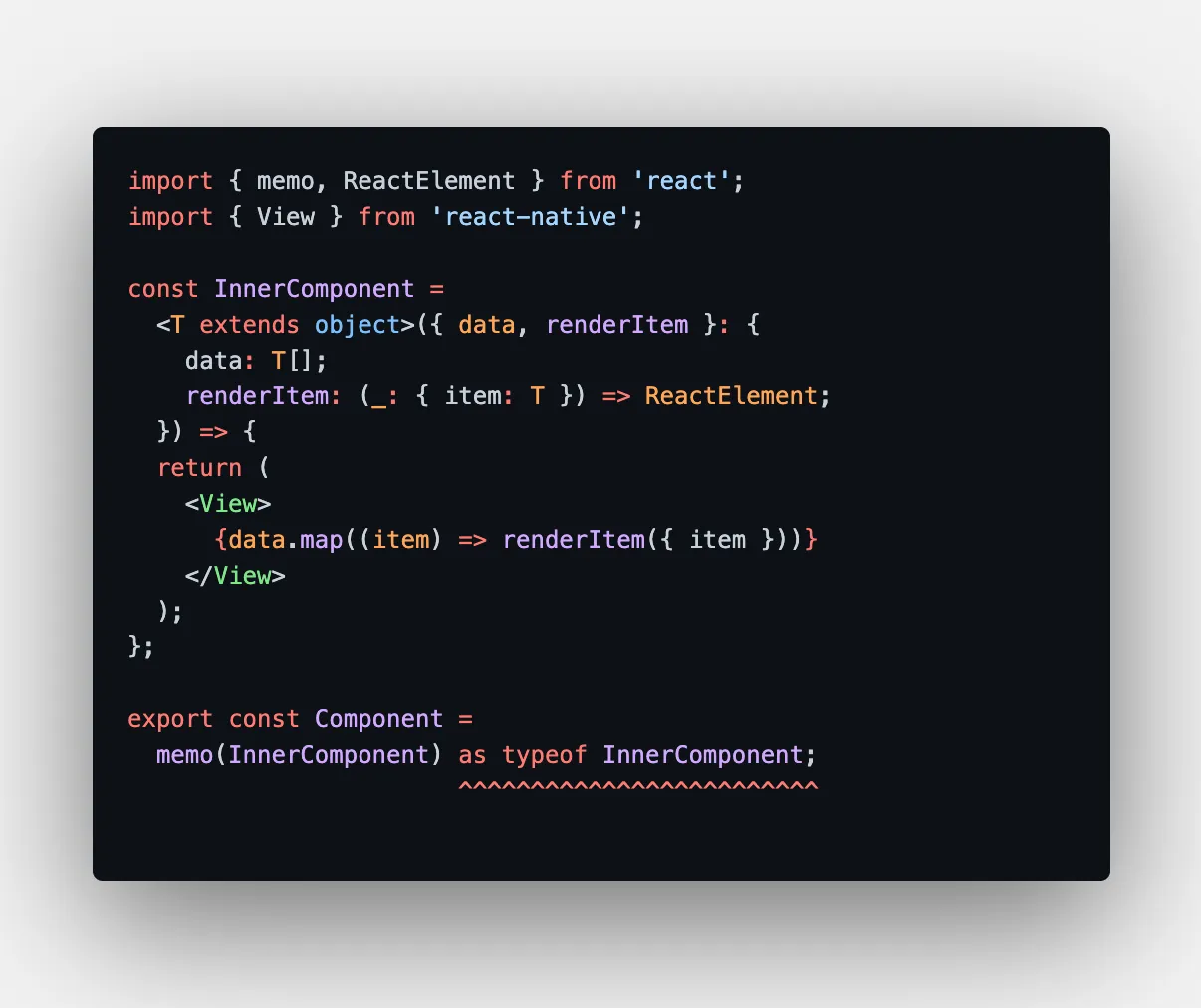
A simple example:

I could find a workaround for using Components with Generics and memo (or even forwardRefs) that helped enforce strict type definitions in my component designs. This solution was given by a fellow react developer in my coworking space.
100daysofcode-generic-type-memo

There is no doubt that writing and speaking skills are incredibly essential nowadays. We have infinite thoughts, though a majority of them are banal. But there are many ideas that, when shared, can lead to meaningful interactions and connections.

During all that hustle in the last 3 years, I hadn’t been reading, writing, or engaging in public communication. Recently, I had moments when it was hard to express myself and communicate well.

With this challenge, I will focus on articulating and publishing a daily post, however small it will be, on this blog under the #100daysofcode tag.

I will discuss javascript, typescript, mono repo, angular, react, and architecture designs. Currently, I do not plan to publish open-source libraries, but I would love to release something helpful to others whenever possible.

I will also use various tools and modes to share knowledge, an upcoming github monorep, Expo Snacks & gists. I also plan to publish a mundane looking timelapse of one of my daily pomodoro sessions on the @ramenhacker Instagram page.

Without a doubt, my work at Statusbrew has and will likely continue to precede other initiatives. However, I want to push myself to pursue other interests, knowing that now it’s more possible to do so than ever before.

My tentative time divisions would be as follows:

  1. Statusbrew (8 – 10 hours)
  2. Publish a readable gist/snack/monorep (0.5 hour)
  3. Timelapse reel (0.5 hour)
  4. Daily progress report blog post (1 hour)

Undoubtedly, I won’t have the same bandwidth to strictly follow the above time allocation. I reckon it will be a tentative time division when looked at over the course of a week or month.

This blog has taken me about 4 hours to write! Of course, I don’t intend to write lengthy monologues every day. But I don’t want to take more than 20-30 minutes to write the next set of posts

My ultimate goal with this challenge is to give a presentation about a topic I have mastered at a developer meetup.

To achieve this goal, I will

  1. Learn to organize my thoughts into speaking bits and writing
  2. Be more active in the nearby developer communities
  3. Become comfortable in front of an audience or camera

In the coming week, I will set up a high-level plan of action and milestones leading toward my goal.

Tomorrow, I will set up and publish a monorepo with my frequently used configs, such as .dotfiles, eslint, and prettier. Soon, I will be writing about Angular, React, Vite, Monorepo architecture, and the best practices we have implemented.
A7400533

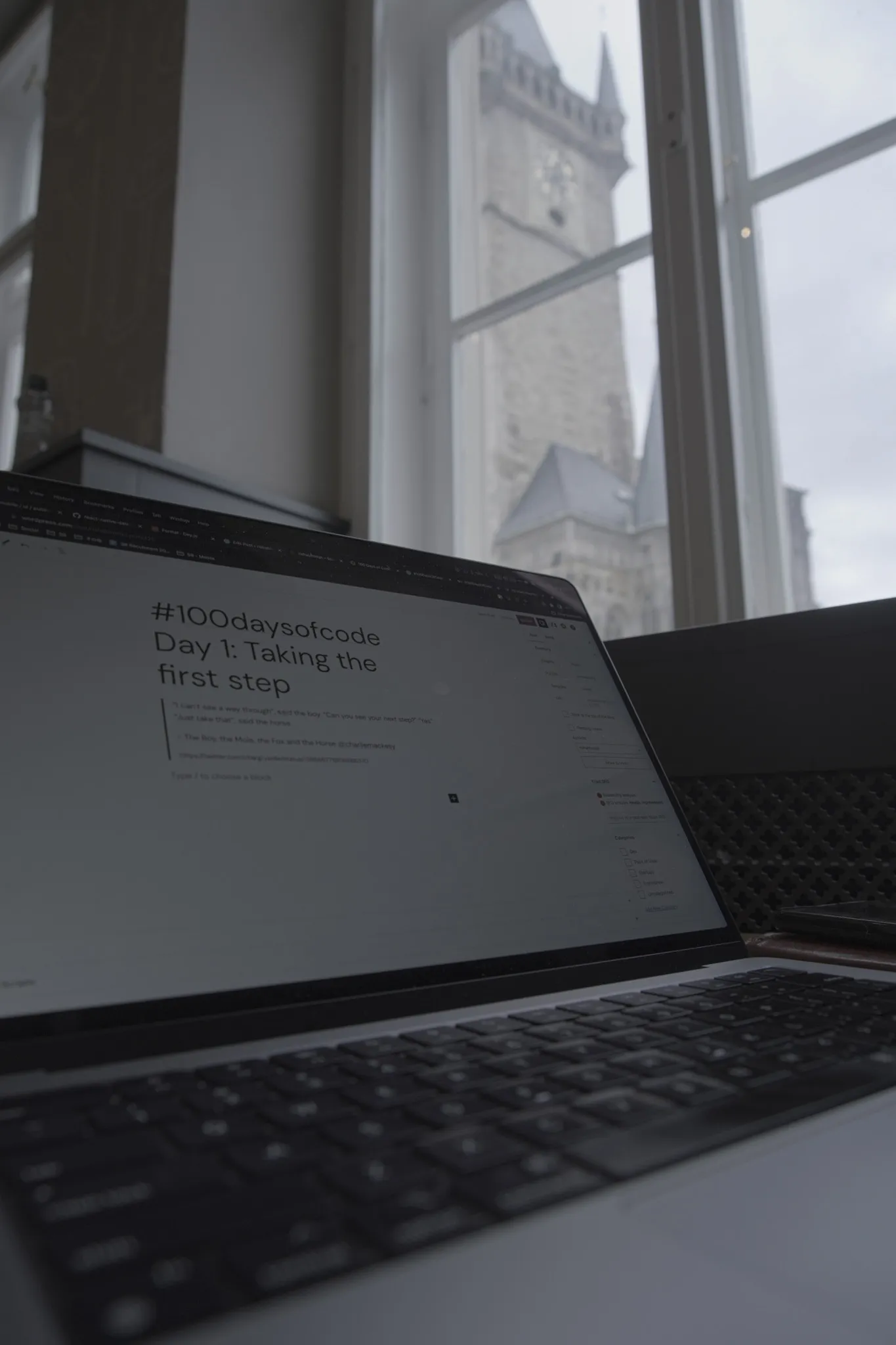
From Starbucks in front of the Astronomical Clock in Prague

This challenge will not solve all my communication problems. But it sure will help improve it a little bit. So I am taking the next step.

Have a great rest of the weekend. See you soon.

Cracking competitive exams is easier now than before

I think those in the 2020s who would study as hard as those in the 2000s or earlier while preparing for competitive exams have the same, if not better, odds of getting into a good engineering, medical, or commerce school.

One may challenge this, arguing that 1) the number of students appearing for the competitive exams is higher and 2) the increase in the number of seats has not been enough; concluding that there’s higher competition than before.

I agree with the arguments but would differ with the conclusion.

There is more accessibility to learning material and coaching with or without in-class learning. Multiple techniques for solving an equation can be learned through an internet search. There is more training and test material available than before.

On the other side, nowadays, students are perpetually distracted by social media or phones. Many are lesser inclined to devote themselves to 3/4/5 years of rigorous college training. Then there is the rise of job opportunities like content writing, photography, or travel/fashion/motivational blogging/speaking.

This works in favor of those willing to stay focused to pursue higher education to have higher odds of getting into a good school.

Rise of shallow and desperate mentors

Back in the 90s when I was growing up, our parents used to look out for people in their 20s to give us advice on career and skill development.

As far as I remember, the then-20s people didn’t have any urge to teach us what to do or to become an inspiration or mentor to us.

I believe it’s because even though, I think, they were more stable, skillful, and successful, they probably felt that they still have a long way to go. Despite others’ perception of them doing well, they felt they still might not know enough. They were humble and conservative when referring to their skills.

Also, I cannot recall a discussion that didn’t conclude with studying to develop skills in STEM, skills that are attained over a long period.

Nowadays, I frequently come across folks barely holding a digital agency job but overtly desperate to teach others how to start up, earn a side income, or travel freely.

None of it alludes to studying hard. The majority of it seems to be selling the ‘idea’ of appearing successful.

Amritsar Startup Manifesto

Guidelines for Entrepreneurship & Innovation to Unlock, Inspire and Drive Growth in Amritsar

Amritsar had been a very prominent business hub up until a few decades ago. But due to the changing socio-economic environment coupled with the failure to keep up with the latest technology and skills, the city has failed to compete with the global market.

Perhaps the draconian government policies are to be blamed.

Still, we believe that the failure to understand the changing global business dynamics, slower technology adoption, and lack of growth mindset has led to the loss of confidence of its people and the business community outside.

India has seen a meteoric rise in the consumption of technology. Internet penetration has increased. Smartphones and data are one of the most economical commodities compared to the rest of the world.

The rising importance of technology-driven economic growth can transform the lives of thousands of people by providing them with high-paying jobs, competitive skills, and a global level-playing field. The increasing availability of high-speed internet means that we can nurture and grow technology businesses that can serve customers from all over the world, right from the comfort of being in our city.

In the coming time, the growth of technology businesses will outpace that of traditional economic sectors.

But, as with many industries, there are roadblocks in the growth of businesses. This is why I, along with some of my fellow entrepreneurs at Amritsar Founders, decided to join and call for radical changes.

We have recognized the following areas which need to be focused on to catapult and sustain the growth of businesses in Amritsar.

  1. Upgrade talent pool
  2. Make available world-class and affordable infrastructure
  3. Update policies to support disruptive innovation
  4. Simplify access to finance

This is an audacious goal that needs buy-ins from many players such as local educational institutes, industry leaders, entrepreneurs, police, lawmakers, and politicians.

  • Set up skill development programs in collaboration with the local educational institutes
  • Make it easier for startups to hire from overseas
  • Incentivize individuals and startups to train teachers and students
  • Support women to start and scale their businesses
  • Encourage and organize hackathons, meetups, and conferences
  • Invite global mentors and companies to provide training to local businesses and institutes

2) Make available world-class and affordable infrastructure

Section titled “2) Make available world-class and affordable infrastructure”
  • Invest in high-speed internet connectivity, even in rural areas
  • Provide cheap and affordable office and co-working spaces on flexible terms
  • Invest in technology at the local universities
  • Provide accessible rentable housing spaces for non-resident workers
  • Invest in entertainment, sports, and playgrounds for recreational purposes
  • Provide resources to local businesses to take part in regional as well as global conferences and exhibitions

3) Update policies to support disruptive innovation

Section titled “3) Update policies to support disruptive innovation”
  • Work with startups to eliminate regulations in technology
  • Formulate employer protection laws to instill confidence in entrepreneurs and investors
  • Review regulations surrounding the sharing economy – office spaces, housing, cars, internet, etc
  • Standardize and facilitate company creation
  • Provide and educate about tax relieves for entrepreneurs
  • Lower minimum investment and compensation requirements for hiring from abroad
  • Ease regulations on ESI, PF, and Insurance
  • Provide affordable loans and tax relieves to the skill development centers

We hope to represent and share a common vision of various entrepreneurs, professionals, small business owners, mentors, investors, and consultants irrespective of the industries. We aim to collaborate, communicate, and contribute to the growth of the local business ecosystem by promoting reasonable and actionable recommendations.

We encourage you to be part of our journey and work with us to bring Amritsar to the top of the World’s Business Map.

Embedded content

Amritsar Co-working Spaces – Cases For and Against

Many times, we at Amritsar Founders are invited by Colleges and Universities to work on proposals of Incubation Centers at their respective places. It’s an audacious project, and something that can change the corporate face of our city.

I wanted to talk about one of the features of Incubation Centers that is seen as a necessity in the whole framework: co-working spaces.

Ideally, co-working spaces can provide necessary infrastructure such as an office with a desk and chair, power connection, internet and meeting rooms to the budding entrepreneurs & small businesses. Co-workings can also provide private cabin spaces for bigger teams. Other perks include security, permanent office address & cafeteria. Luxury ones may consist of gyms & fitness centers too.

Let me start with how co-working spaces can be valuable to our community.

If you have worked as a solo entrepreneur or a freelancer, you know that it is lonely to be doing things on your own without a peer group. Co-working spaces provide an excellent opportunity to be surrounded by those who are also working on their dreams that would keep you motivated and inspired to work on yours.

We at Statusbrew have seemingly been working from our cave, Statusbrew HQ, with little interaction with the outside community, and it had been a lonely journey. Amritsar Startups was our initiative to create a community of go-getters and our answer to eliminate working alone. Later, I found solace with my newly formed group of entrepreneurs at Amritsar Founders. It’s truly remarkable how ideas and thoughts can be shared and transferred when you have a group of like-minded people you can call your own.

Having surrounded with like-minded people and the ability to interact with them, many opportunities can unfold. You can learn new skills, connect with potential clients, and even get a direct connect to the investors.

No rental contracts (office, internet, electricity, etc.), no maintenance, no hassle of dealing with infra! Co-working saves you not only real money but also saves you time and opportunity costs. This is great for freelancers as well as small to mid-sized companies.

And oh, the improvements to infra is also part of the job of your co-working provider. You don’t need to worry about upgrading infra anymore.

As promising the idea of networking is, it can also be a perpetual means to distract oneself. Some teammates would be found more often at common spaces or someone else’s desk than getting their own job done. Other teams at the space can be loud. There will be circumstances out of your control and can lead to reduced productivity.

Since you do not own the place, you would be potentially stuck with one allotted desk space for a considerable time. You would not be able to change orientation or decorate your workspace the way you like. Even bringing personal work amenities like whiteboards might require approvals.

It might prove to be cost-effective for freelancers or small businesses by saving some upfront costs. However, it can prove to be quite expensive for mid to large companies as pricing is usually set on a per seat basis.

Talking about this puts me in a very slippery slope as I am still part of the local communities, but I feel we need to talk about the core challenges that surround co-working, which ironically, have little to do with co-working.

I think creative teams, HR and admin teams can work out of co-working spaces efficiently without significant concerns.

But it can be an issue for core, tech (product or service) companies to be working out of co-working spaces due to requirements of safeguarding intellectual properties and private information. Core development and sales teams can be the ones under a more rigorous scrutiny for this.

However additionally, since in Amritsar, a majority of the companies are into IT services – digital marketing, web & app development, etc., there can be understandable concerns about keeping their internal business processes secret.

  1. Hoping clients – since both your clients and other teams can now know about each other (visits, or overhearing discussions), they can quickly jump.
  2. Copying of ideas – expertise in creative content
  3. Information security leak – personal information of clients, contracts and intellectual property
  4. Talent poaching – other teams can pay more to recruit your trained staff

Ways Co-working spaces can work in Amritsar

Section titled “Ways Co-working spaces can work in Amritsar”

Co-working can be a great fit for companies that do not have major overlapping business processes since there will be no concern about clients or team spillovers.

Companies that require a high level of information security can work out of cabins so that their internal discussions or plans cannot be overheard by other tenants. Sales teams can make use of conference rooms to make sales calls, deliver product demos, or meet clients.

Moreover, a simple agreement must be signed by all co-working tenants to ensure they adhere to a certain level of information protection. Defaulters should be penalized and may also be asked to leave the co-working space after a thorough hearing process.

I believe co-working is terrific and it would provide many opportunities for the community in growing their ventures. With this, we may also be able to attract a lot of investors, perhaps have a global incubator from our city. With a good plan and careful execution, we can see many global companies starting from the Holy City.